
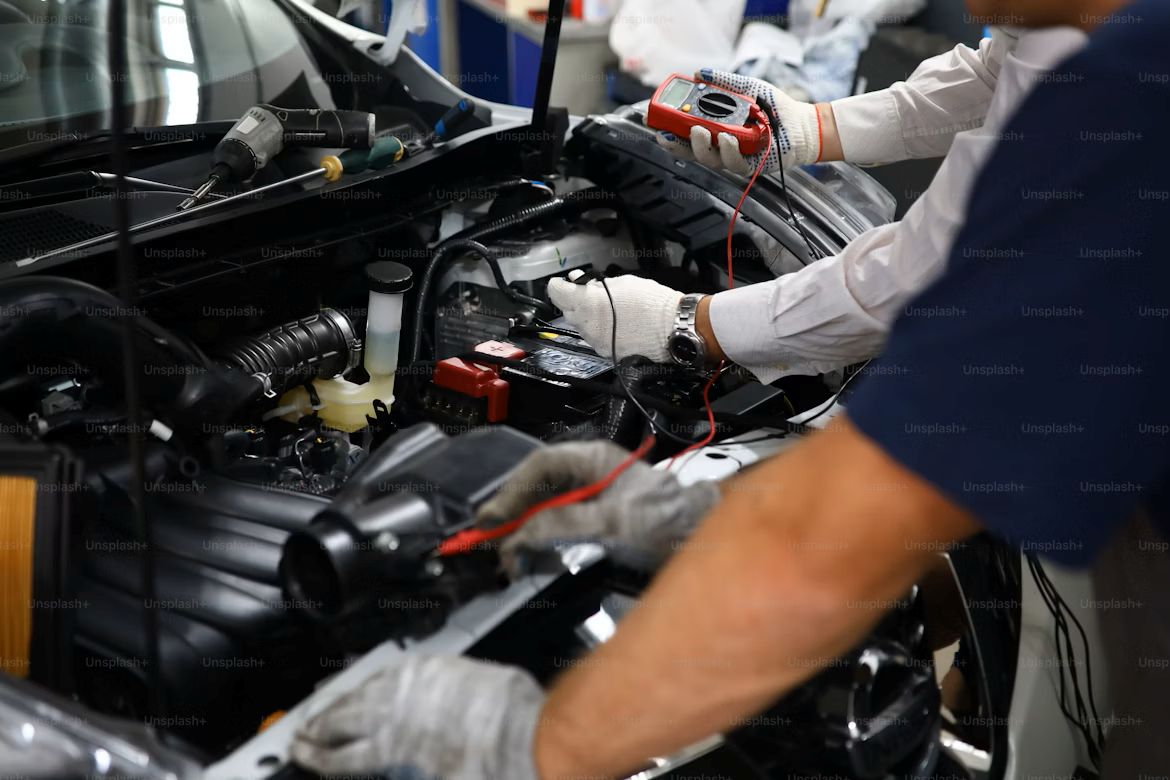

Battery Diagnostics
Welcome to Autograph BVS — a professional car service center in Finestrat, Alicante. We offer a complete range of battery diagnostics services using state-of-the-art equipment and highly qualified specialists.
The vehicle battery — is a critical source of electrical power that provides engine starting, powers electrical systems and provides backup power. The condition of the battery determines reliability, performance and safety of your vehicle. Our team in Finestrat is ready to perform comprehensive battery diagnostics of your car quickly and efficiently.
What is Battery Diagnostics?
Battery diagnostics — is comprehensive testing of battery condition using special equipment to identify problems with capacity, voltage, terminal condition and full functionality. Professional diagnostics allows timely identification of problems before complete battery failure.
Main battery diagnostics parameters:
- Resting voltage — standard voltage of fully charged battery (12.6V for cars)
- Voltage under load — voltage during engine starting
- Battery capacity — amount of energy battery can store
- Internal resistance — indicator of battery condition
- Terminal condition — contact and oxidation check
- Electrolyte level — in traditional batteries
- Low temperature performance — starting current in cold weather
- Generator — checking generator function as charging source
Main battery functions:
- Provide engine starting
- Power electrical systems with engine off
- Stabilize voltage in on-board network
- Backup power for important systems
- Support safety systems operation (airbags, ABS)
- Power lighting devices
Why battery diagnostics?
- Determine exact battery condition
- Prevent unexpected battery failure
- Identify charging problems (generator)
- Determine battery replacement timeframe
- Avoid roadside breakdown
- Ensure driving safety
- Check electrical connection quality
- Perform preventive maintenance
Types of Battery Problems
1. Low Battery Voltage
One of the most common problems:
Characteristics:
- Weak engine starting
- Dim headlight glow
- Slow starter operation
- Voltmeter readings below normal
- Engine won’t start
Causes:
- Old battery (battery wear)
- Generator problems (not charging)
- Battery terminal oxidation
- High energy consumption when parked
- Internal battery defect
Consequences:
- Engine won’t start
- Starter damage
- Loss of electrical system functionality
- Roadside breakdown
2. High Internal Resistance
Problem indicating battery degradation:
Characteristics:
- Rapid voltage drop under load
- Weak starting at low temperatures
- Fast battery discharge
- Unstable electrical system operation
- Deep voltage sag during starting
Causes:
- Battery plate sulfation
- Internal contact oxidation
- Multiple deep discharges
- Natural battery wear
- Battery quality control during manufacturing
Consequences:
- Inability for full engine starting
- Battery replacement necessity
- Possible starter damage
- Electrical system instability
3. Generator Issues
Charging system problem:
Characteristics:
- Battery doesn’t charge while driving
- Voltage drop over time
- Battery charge light constantly on
- Quick discharge with running engine
- Unstable network voltage
Causes:
- Failed generator diode bridge
- Generator brush wear
- Voltage regulator problems
- Rotor or stator failure
- Drive belt problems
Consequences:
- Constant battery discharge
- Impossibility of long trips
- Battery damage from undercharging
- Generator replacement necessity
4. Terminal Corrosion
Connection problem:
Characteristics:
- White or greenish deposits on terminals
- Poor contact between wires and terminals
- Weak engine starting
- Unstable electrical system operation
- Visible metal destruction on terminals
Causes:
- Chemical reaction between copper and sulfate
- Electrolyte leak from battery
- Oxidation from moisture and oxygen
- Poor contact between terminal and cable
- Cable insulation degradation
Consequences:
- Increased circuit resistance
- Weak power transmission
- Possible electrical equipment damage
- Engine starting problems
5. Current Leakage
Battery self-discharge problem:
Characteristics:
- Rapid battery discharge when parked
- Battery discharge in few days
- Electrical system issues with engine off
- Clicking or noise in electrical system
- Hot battery during long parking
Causes:
- Failed electrical equipment (switches, sensors)
- Damaged wiring
- Failed alternator diode
- Alarm system problems
- Damaged cable insulation
Consequences:
- Inability to start after long parking
- Battery damage from deep discharge
- Need for electrical system diagnostics
- Frequent battery recharging necessity
6. Low Battery Capacity
Battery aging problem:
Characteristics:
- Insufficient capacity for full engine start
- Quick discharge with electrical devices use
- Weak starting in cold weather
- Inability to start at low temperature
- Battery age over 3-4 years
Causes:
- Natural battery aging
- Multiple deep discharges
- Battery overcharging
- Extreme temperature use
- Manufacturing defect
Consequences:
- Battery replacement necessity
- Long trip impossibility
- Cold weather starting problems
- Roadside breakdown
7. Cold Cranking Amperage (CCA) Problems
Low temperature starting problem:
Characteristics:
- Inability to start in freezing temperature
- Slow starting in cold weather
- Weak starter in frost
- Unstable winter starting
- Multiple attempts required to start
Causes:
- Low battery quality
- Worn out battery
- Incorrect battery selection
- Internal resistance problems
- Low electrolyte level
Consequences:
- Winter start inability
- Winter roadside breakdown
- Starter damage from excessive current
- Battery replacement necessity
8. Swollen Battery Case
Physical battery defect:
Characteristics:
- Noticeable plastic case swelling
- Battery shape distortion
- Poor battery contact in slot
- Possible electrolyte leak
- External case damage
Causes:
- Battery overcharging
- Internal battery defect
- Generator voltage regulator problems
- Extreme temperatures
- Manufacturing defect
Consequences:
- Potential danger (explosion possibility)
- Battery unusability
- Immediate replacement necessity
- Surrounding component damage
The Battery Diagnostics Process at Autograph BVS
Step 1: Visual Inspection
Our specialists conduct visual inspection of battery for terminal oxidation, case damage, electrolyte leaks and overall condition.
Step 2: Resting Voltage Check
Using digital multimeter, fully charged battery voltage is checked (should be at least 12.6V). This shows battery’s ability to reach full charge.
Step 3: Voltage Under Load Check
Special equipment measures voltage during engine starting attempt. Normal voltage should be above 10.5V.
Step 4: Internal Resistance Measurement
Modern diagnostic devices measure battery’s internal resistance showing plate condition and electrolyte state. High resistance indicates battery wear.
Step 5: Battery Capacity Check
Capacity is measured in amp-hours (Ah). Result is compared with battery’s rated capacity. If actual capacity is less than 80% of rated, replacement is required.
Step 6: Load Testing
Battery is subjected to load using special diagnostic equipment simulating engine starting. Battery should sustain load for set time period.
Step 7: Generator Check
Generator output voltage is checked with running engine. Normal voltage is 13.5-14.5V. If voltage is lower or higher, generator repair is required.
Step 8: Electrical Connections Check
All cables, terminals and connections are checked for oxidation, poor contact and damage.
Step 9: Current Leakage Check
Ammeter is used to check parasitic current leakage with engine off. Normal leakage shouldn’t exceed 50 mA.
Step 10: Computer Diagnostics (if necessary)
Full vehicle systems diagnostics to identify defect that may cause current leakage or charging problems.
Step 11: Consultation and Recommendations
Our experienced technical specialist explains diagnostics results in detail, shows visual indicators and recommends necessary actions (battery replacement, generator repair, terminal cleaning, etc.).
Advantages of Diagnostics at Autograph BVS
✓ Accurate diagnostics — identify problems in 20-40 minutes
✓ Professionalism — over 15 years of vehicle electrical system diagnostics and repair experience
✓ Modern equipment — using latest diagnostic scanners and load tests
✓ Complete check — we diagnose not just battery but entire power supply system
✓ Fair prices — competitive rates for diagnostics and repair
✓ Service guarantee — provide warranty on completed work
✓ Convenient location — located in center of Finestrat, Alicante
✓ Professional team — experienced electricians and diagnosticians
✓ Comprehensive solutions — can perform all work in one place
✓ Quick service — perform work as quickly as possible
✓ Free consultation — free consultations on your battery condition
Types of Battery Diagnostics
1. Basic Battery Test
Standard battery condition check:
Includes:
- Visual battery and terminal inspection
- Resting voltage measurement
- Voltage under load check
- Electrical connections check
- Preliminary recommendations
When required:
- Annual maintenance
- Engine starting problems
- Before long trips
- Suspected weak battery
2. Comprehensive Battery Diagnostics
Full battery and electrical system analysis:
Includes:
- All basic diagnostics points
- Internal resistance measurement
- Battery load test
- Battery capacity check
- Generator check
- Current leakage check
- Full electrical system analysis
When required:
- Starter malfunction
- Generator improper operation
- Terminal heavy oxidation
- Before battery replacement
- Cold weather problems
3. Cold Weather Battery Test
Cold temperature starting current testing:
Includes:
- Cold Cranking Amperage (CCA) measurement
- Low temperature operation check
- Winter starting ability analysis
- Cold climate battery selection recommendations
When required:
- Before winter season
- Cold weather starting problems
- Vehicles parked outside
- Preventive winter maintenance
4. Charging System Diagnostics
Comprehensive generator and related systems testing:
Includes:
- Generator output voltage check
- Charging current measurement
- Generator diode bridge check
- Voltage regulator check
- Generator-battery connection analysis
When required:
- Constant battery discharge
- Low network voltage
- Headlight flickering
- Battery charge light on
5. Parasitic Drain Diagnostics
Battery self-discharge cause identification:
Includes:
- Resting current leakage measurement
- Leak location localization
- Individual electrical circuit check
- Equipment analysis
- Faulty component identification
When required:
- Rapid parking battery discharge
- Battery discharge in few days
- After additional equipment installation
- Hidden defect identification
6. Battery Endurance Test
Long-term battery testing under various conditions:
Includes:
- Multiple charge-discharge cycles
- Various load testing
- Voltage stability check
- Battery behavior over time analysis
- Remaining service life forecast
When required:
- Doubts about new battery quality
- Before warranty service
- Rare or valuable vehicles
- Battery life maximum extension
Diagnostic Equipment for Battery Testing
1. Digital Multimeter
Basic tool for voltage and resistance measurement:
Capabilities:
- DC voltage measurement
- Resistance measurement
- Circuit continuity check
- AC voltage measurement
Accuracy: ±0.5-1%
2. Battery Load Tester
Specialized equipment for battery load testing:
Capabilities:
- Create controlled load
- Voltage under load measurement
- Cold cranking amperage (CCA) determination
- Automatic battery condition calculation
Accuracy: ±2-3%
3. Battery Analyzer with Thermometer
Advanced battery analysis equipment:
Capabilities:
- All battery parameters measurement
- Built-in temperature compensation
- Internal resistance determination
- Battery life prediction
Accuracy: ±1%
4. DC Ammeter
For current leakage measurement:
Capabilities:
- Current leakage measurement
- Circuit noise detection
- Leak location localization
Accuracy: ±1-2%
5. Oscilloscope
For voltage quality analysis and interference detection:
Capabilities:
- Voltage waveform visualization
- Interference and noise detection
- Generator operation analysis
Accuracy: ±0.1%
Battery Problem Diagnostics
Problem: Engine Won’t Start
Possible causes:
- Discharged or low voltage battery
- Damaged battery terminals
- Failed starter
- Generator problems
Recommended actions:
- Check battery voltage with multimeter
- Check terminals for oxidation
- Try jump-starting from another battery
- If battery is good, check starter and generator
Problem: Headlights Dim
Possible causes:
- Low battery voltage
- Generator problems (not charging)
- Poor electrical circuit contact
- Generator improper operation
Recommended actions:
- Check battery voltage
- Check generator output voltage with running engine
- Inspect wires and connections
- Contact service for full electrical system diagnostics
Problem: Battery Discharges Quickly
Possible causes:
- Parasitic current leakage
- Failed generator
- Improper electrical equipment operation
- Failed generator diodes
Recommended actions:
- Ensure all electrical consumers are off
- Check for current leakage
- Check generator operation
- Computer diagnostics for defect identification
Problem: Battery Doesn’t Charge
Possible causes:
- Failed generator
- Damaged generator drive belt
- Voltage regulator problems
- Battery terminal oxidation
Recommended actions:
- Check generator drive belt
- Measure generator output voltage
- Check battery terminals for oxidation
- If generator voltage is low, generator repair is required
Problem: Battery Terminals Oxidized
Possible causes:
- Electrolyte leak
- Chemical contact reaction
- High humidity
- Battery age
Recommended actions:
- Disconnect battery from vehicle
- Clean terminals with brush and baking soda
- Rinse terminals with clean water
- Dry and apply protective lubricant
- Reconnect terminals
Battery Maintenance Tips
Regular Maintenance
- Monthly — visual battery inspection for oxidation and damage
- Every 3 months — battery voltage check with multimeter
- Every 6 months — professional battery diagnostics
- Annually — comprehensive battery and generator diagnostics before winter
Proper Vehicle Operation
- Don’t leave electrical devices on with engine off
- Avoid deep battery discharge
- Drive regularly to charge battery
- Check battery fit in slot
- Keep terminals clean
External Factor Protection
- Protect battery from extreme temperatures
- Prevent water entry into battery
- Ensure good engine compartment ventilation
- Use battery cover in cold climate
Battery Replacement Timeframe
- Most car batteries last 3-5 years
- After 3 years, annual diagnostics recommended
- After 5 years, battery replacement is recommended
Frequently Asked Questions About Battery Diagnostics
Q: How often should battery be checked?
A: It’s recommended to check battery every 6 months, especially before winter and summer.
Q: What voltage is considered normal?
A: Normal fully charged battery voltage is 12.6V. With running engine - 13.5-14.5V.
Q: Why does battery discharge quickly?
A: This could be current leakage, failed generator or old battery. Diagnostics required.
Q: Can old battery be restored?
A: If battery is over 5 years old and capacity dropped below 80%, replacement is more practical than restoration.
Q: How long does battery last?
A: Usually 3-5 years, but depending on operation conditions can last longer.
Q: What if battery is swollen?
A: This is dangerous. Battery must be replaced immediately. Don’t drive this vehicle.
Q: Why do terminals oxidize?
A: Chemical reaction between metal and gases released by battery. Normal but requires cleaning.
Q: What battery to choose for replacement?
A: Choose battery with capacity (Ah) and starting current (CCA) not less than original battery.
Insurance and Warranties
At Autograph BVS we provide:
✓ Diagnostics warranty — if diagnostics showed replacement need, we help with battery selection
✓ New battery warranty — all installed batteries have 2-3 year manufacturer warranty
✓ Free battery reinstallation — if battery fails within warranty period
✓ Service insurance — all performed services insured under appropriate conditions
Why Choose Autograph BVS?
Our car service center in Finestrat, Alicante offers best combination of quality, price and convenience:
Professional Experience — over 15 years of vehicle electrical system diagnostics and repair experience
Full Range of Services — from basic diagnostics to comprehensive electrical system analysis
Modern Technologies — using most advanced diagnostic devices and analyzers
Quality Batteries — work only with verified quality battery manufacturers
Honest Prices — transparent pricing without hidden fees
Professional Team — experienced electricians and diagnosticians
Customer Care — we carefully listen to your problems and offer best solutions
Quick Service — work efficiently to return your vehicle as soon as possible
Free Consultation — provide complete information about your battery condition
Contact Information
Autograph BVS — your reliable partner in battery diagnostics and service
Address: Finestrat, Alicante, Spain
Specialists: Experienced electricians and diagnosticians
Service: Complete battery and electrical system diagnostics range
Warranty: Warranty on all completed work and installed batteries
Contact us today for professional battery diagnostics!
Add new comment